

How much home can I realistically afford in Arlington Heights right now, including taxes and HOA fees?
How Much Home Can You Afford in Arlington Heights, Illinois
TLDR
-
Most first-time homebuyers qualify near 28 percent front-end DTI with taxes included.
-
Condos from $230K to $320K and starter homes $380K to $480K are typical.
-
Property taxes near 1.7 percent and HOA fees significantly shape your monthly payment.
-
Pre-approval, assistance programs, and smart offer tactics improve outcomes and affordability.
What does “how much home can I afford” really mean in Arlington Heights?
Affordability is not just your mortgage payment. In Arlington Heights Real Estate, the real number must include principal, interest, property taxes, homeowner’s insurance, and HOA dues if applicable. Lenders call that PITI. Most lenders evaluate this with your debt-to-income ratios, using a target near 28 percent for housing and 36 to 43 percent for total debts. That is the framework I use to set realistic budgets for First-time homebuyers.
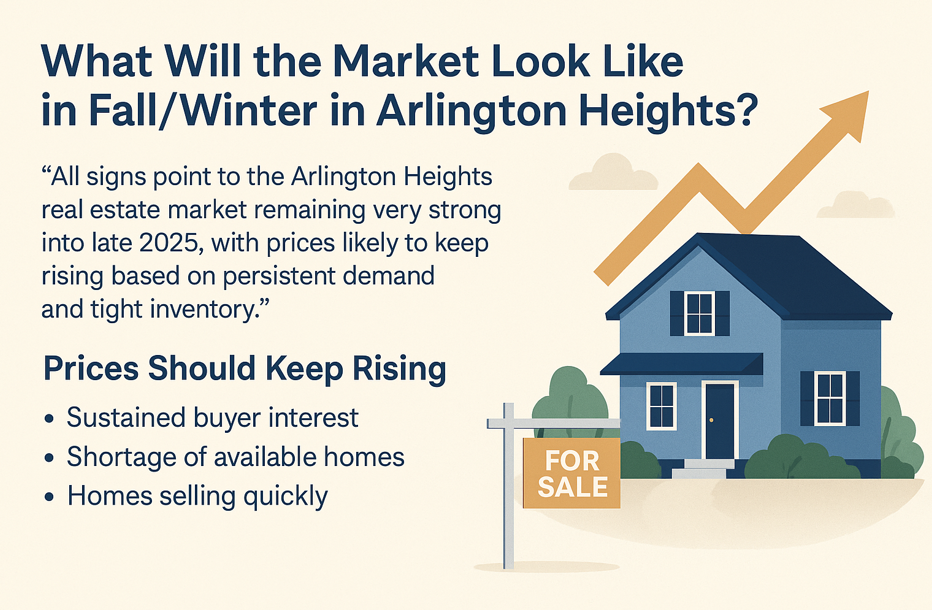
Local context matters. Recent MLS data shows the median sale price around $431,250, up roughly 9 percent year over year, with homes averaging about 59 days on market. Inventory remains constrained near the downtown core by 11 S Evergreen Ave, where walkability and Metra access push demand. At year end, our MLS tracked roughly 135 active listings and about 44 new listings entering monthly, which keeps competition steady and list-to-sale ratios close to even.
Here is how I define it as Mike Zapart:
- Your maximum budget is the price where PITI plus HOA fits within 28 percent of gross income.
- You should still have 2 months of reserves after closing for safety and lending strength.
- Your offer strategy must reflect a market averaging about two offers per listing.
How do lenders calculate affordability, and how do property taxes and HOA fees influence it?
Most lenders start with your gross monthly income, compare it to projected PITI, and apply a front-end ratio near 28 percent. For example, a buyer earning $6,500 per month targets about $1,820 for PITI. At a 6.5 percent 30-year fixed rate, that often supports a loan close to $285,000. With 5 percent down, your purchase price is roughly $300,000. This aligns with common first-time budgets for Arlington Heights condos and some townhomes.
Cook County property taxes are a big lever. The effective rate often approximates 1.7 percent of market value. On a $300,000 home, that is about $5,100 per year or $425 per month. HOA fees commonly range from $200 to $400 per month for condos, which can reduce your buying power by the same amount as a higher mortgage payment. Insurance for a condo can be near $25 to $50 per month if the HOA covers the building, while single-family homes often carry higher individual policies.
For benchmarks:
- Track mortgage rates on FRED’s 30-year fixed series, which recently hovered near 6.5 percent FRED mortgage rate.
- Review local demographics to gauge community stability and income levels via U.S. Census QuickFacts Arlington Heights QuickFacts.
- For tax context, see Cook County resources on property taxes Cook County property tax info.
What does this look like in monthly dollars?
- $300,000 condo at 5 percent down, 6.5 percent rate: about $1,900 principal and interest. Add taxes near $425, condo insurance near $35, and HOA near $300. Estimated total near $2,660 per month.
- $400,000 townhome at 5 percent down: around $2,530 P&I, taxes near $580, insurance near $75, HOA near $300. Estimated total near $3,485 per month.
- $450,000 single-family home at 5 percent down: about $2,845 P&I, taxes near $655, insurance near $120. Estimated total near $3,620 per month.
These are illustrations. Your actual numbers vary by down payment, credit score, and specific property.
Which Arlington Heights neighborhoods fit common first-time budgets?
Many First-time homebuyers look to be near the action around our office at 11 S Evergreen Ave, the Metra station, and downtown restaurants. If you want to buy a first home with walkability, expect higher demand and tighter inventory. For more value, consider established neighborhoods a bit farther from the core with larger lots and mid-century homes.
- Downtown Arlington Heights
– Details: Condos and lofts near Metropolis Performing Arts, dining, and Metra. Ideal for commuters to the city on the UP-NW line. – Watchouts: HOA fees can be higher, and parking can be limited for some buildings. – Typical timeline: 30 to 45 days from offer to close when financing is straightforward.
- Westgate and Pioneer Park
– Details: Classic 1950s to 1960s single-family homes with parks, schools, and tree-lined streets. Good access to Route 53 and I-90. – Watchouts: Some homes need modernization. Budget for systems updates in your affordability plan. – Entry-level path: Aim for the $380,000 to $450,000 range for smaller homes.
- Scarsdale and Stonegate
– Details: Charming, highly sought-after neighborhoods with well-kept homes and strong community appeal. – Watchouts: Competition can be strong. Pre-approval and quick tours are essential. – Typical timeline: 45 to 60 days with possible appraisal negotiations.
- Ivy Hill and Greenbrier
– Details: Northwest-side neighborhoods with a mix of split-levels and colonials, often larger lots. – Watchouts: Slightly longer commutes to downtown core. Factor drive times to Metra. – Entry-level path: Townhomes and smaller SFHs often start in the low to mid $400s.
- Terramere
– Details: Planned community feel with lakes, paths, and access to highly regarded schools. – Watchouts: HOA rules vary. Review budgets and reserves closely. – Typical timeline: 30 to 45 days and sometimes multiple offers.
These are places where affordable properties in Arlington Heights can still be found with the right timing and preparation. Local MLS shows homes average about two offers, so structuring a clean offer matters.
What are the pros and cons of buying now versus waiting?
Pros:
- Prices rose roughly 6 to 9 percent year over year, suggesting ongoing demand.
- Mortgage rates have eased from mid-2025 highs, improving monthly payments versus last summer.
- Low inventory supports future values, which can reward buyers who lock in now.
Cons:
- Competition remains real, often two offers per listing. Some homes still sell quickly.
- HOA fees and taxes can push monthly payments higher than expected for condos.
- Rates could drift up again, which impacts affordability if you wait without a plan.
How do I build a winning plan to buy a first home here?
Start with an honest budget. Use the 28 percent front-end ratio as guardrails, then layer in local taxes and realistic HOA dues. If you are targeting $300,000 to $320,000 condos or $380,000 to $480,000 single-family homes, get a fully underwritten pre-approval. Ask your lender to run scenarios with and without HOA fees so you see how they change your max price. I recommend lenders familiar with IHDA and local down payment assistance.
- Explore IHDA MyHome programs for 4, 5, or 10 percent assistance.
- Check Cook County’s down payment assistance pilot status and eligibility.
- Confirm your homebuyer education requirement through IHDA or Club 720 if using assistance.
One of my clients purchased a $350,000 condo near downtown with Access Deferred assistance, bringing less than $1,000 to closing and keeping their monthly total near $2,450, including HOA. They shaved 10 minutes off their commute by using the UP-NW line. Another client, a nurse, used county assistance on a $420,000 townhome in a school-focused area. We kept the appraisal gap limited to 3 percent and closed in 28 days.
If you want walkability, check listings near the Metropolis Theatre and North School Park, then compare a second option in Westgate or Pioneer Park where you might trade a slightly longer walk for a lower HOA. As the Mike Zapart best real estate agent in Arlington Heights, I help you weigh these tradeoffs with real numbers so your decision is calm and confident.
FAQs
1) How do I estimate my maximum purchase price with taxes and HOA included? Start with your gross monthly income and multiply by 0.28 for a housing target. Subtract estimated taxes, insurance, and HOA to see what is left for principal and interest. Use today’s rate from a trusted lender or a public benchmark like FRED and solve for a loan amount. Add your down payment to estimate a purchase price. Always leave room for maintenance and utilities.
2) Are condos or townhomes better for First-time homebuyers who want to buy a first home? Condos often have lower purchase prices but higher HOA dues. Townhomes may balance slightly higher prices with moderate HOAs. Single-family homes trade HOA for more ongoing maintenance. If you prioritize walkability near downtown, condos can shine. If you want more space in Westgate, Pioneer Park, or Ivy Hill, townhomes or smaller single-family homes may fit better. Compare total monthly costs rather than just list price.
3) How do school districts affect affordability in Arlington Heights Real Estate? Strong schools boost demand, which can add a premium to homes in areas served by District 25 and Township High School District 214. Your monthly impact shows up in higher list prices rather than significantly different tax rates. If schools matter, we can focus on streets feeding into John Hersey, Prospect, or Buffalo Grove while balancing budget. Always verify boundaries with the district before making an offer.
4) What is the realistic down payment I need, and what assistance is available? Many buyers use 3.5 percent FHA or 5 percent conventional. IHDA offers 4, 5, or 10 percent assistance options that can be forgivable, deferred, or repayable. Cook County’s program can offer up to 5 percent of the purchase price when funded. Assistance typically requires credit scores near 640, income within AMI limits, and homebuyer education. I can introduce lenders who specialize in these programs.
5) How competitive are offers near 11 S Evergreen Ave and the downtown core? Expect about two offers on average in the current market. Clean offers with a fully underwritten pre-approval and flexible timelines get attention. Escalation clauses and small appraisal gaps can be useful if used carefully. I advise keeping appraisal gaps within 3 to 5 percent of list and backing them with recent MLS comps. In some cases, shortening inspection periods helps without sacrificing protections.
6) How do rates moving from 6.5 percent to 6.0 percent change affordability? On a $400,000 purchase with 5 percent down, a rate drop from 6.5 percent to 6.0 percent often lowers principal and interest by roughly $125 to $175 per month. That can expand your budget or reduce your payment. If prices rise while rates drop, the effects can offset. My approach is to model both scenarios with your lender so you can decide whether to lock now or float.
7) What local factors should I watch in 2026 that could impact values? Watch redevelopment of the Arlington Park site, ongoing transit-oriented projects, and any shifts in inventory entering the spring market. Downtown demand near Metra and amenities remains a strong anchor for values. Population, income, and employment resilience are tracked by the U.S. Census and local economic releases. For community updates, follow the Village’s official site Village of Arlington Heights and transit schedules on Metra.
Conclusion
The bottom line Affordability in Arlington Heights is about the whole monthly picture. Use a 28 percent housing ratio, plug in a realistic property tax estimate near 1.7 percent, add insurance, and do not forget HOA dues if you prefer a condo lifestyle near the Metra. With rates around 6.5 percent, many First-time homebuyers can comfortably target $230,000 to $320,000 for condos or $380,000 to $480,000 for starter single-family homes. The right lender, assistance program, and offer strategy can stretch your options without stretching your budget. If you want a precise plan tailored to your income and neighborhoods like Westgate, Pioneer Park, or the downtown core, I am ready to help.
Cara Team at Compass | License #475145813 Call or text 2247158778 https://cara.team/